KBI is launching a two-phase, two-year initiative to increase our congregation’s engagement with the festival of Sukkot by being Sukkah builders, hopefully this year; and next year, begin hosting fellow congregants in a well-organized Sukkah Hop for different ages and stages of our membership. It’s not just a mitzvah — it’s a lot of fun!
So please read on to learn more about Sukkot (the holiday and the structure!), and to build (or buy) your own sukkah!
Sukkot, also known as the Feast of Tabernacles, is a joyful, week-long Jewish holiday celebrated in the autumn. It commemorates the 40 years the Israelites spent wandering the desert, living in temporary shelters, after escaping slavery in Egypt. It is also a beautiful harvest festival, giving thanks for the bounty of the earth and the gathering of crops.
The Torah Source
The central commandment to dwell in a sukkah is found in the Torah in the book of Leviticus (Vayikra) 23:42-43:
“You shall dwell in booths for seven days; all citizens in Israel shall dwell in booths, in order that future generations may know that I made the Israelite people live in booths when I brought them out of the land of Egypt, I the LORD your God.”
What does it mean to “Dwell in the Sukkah”? What doesn’t it mean?
To fulfil the biblical commandment to “dwell” (תֵּשְׁבוּ – teishvu) in booths, rabbinic tradition established the guiding principle of תֵּשְׁבוּ כְּעֵין תָּדוּרוּ – teishvu k’ein taduru—meaning you should dwell in the sukkah just as you reside in your permanent home. In practical terms, this involves treating the structure as your primary living space for the seven days of the festival: eating your significant meals, hosting guests, spending your leisure time, and ideally even sleeping within its walls. However, a common misunderstanding is that this mitzvah demands a strict test of endurance against the elements. On the contrary, Jewish law dictates that the festival must be an experience of joy. Because of this, there are important clarifications and exceptions, most notably the rule of the מִצְטַעֵר – mitzta’er (one who is suffering). If staying in the sukkah causes genuine discomfort—such as during heavy rain, unseasonably cold weather, or an onslaught of insects—you are entirely exempt from remaining inside. The halachic reasoning is highly intuitive: just as you would leave your indoor dining room if the ceiling began leaking, you are permitted to return to the comfort of your house. This pragmatic exception reinforces that the sukkah is meant to serve as a welcoming, temporary extension of your home rather than a place of hardship.
The Sukkah Structure & Laws
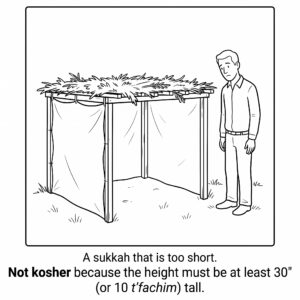
A sukkah is a temporary structure designed to provide shade while remaining open to the elements and the natural world. Key laws (halachot) regarding its construction include:
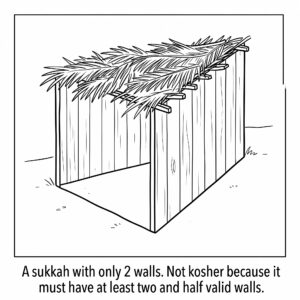
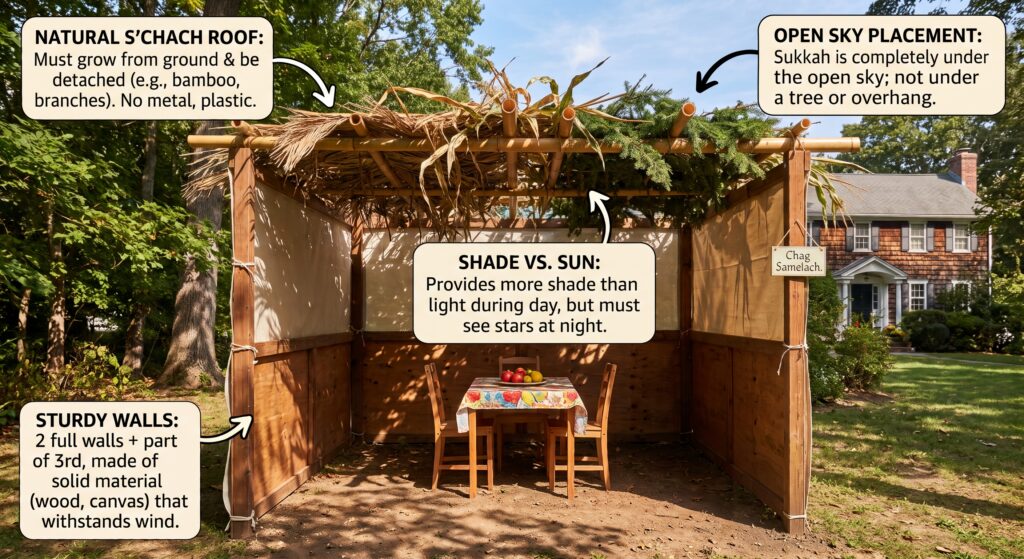
The Walls: A kosher sukkah must have at least two complete walls and a small part of a third. The walls can be made of any sturdy material (such as wood, canvas, or fibreglass) that will not blow away in a normal wind.
The Roof (S’chach): This is the most crucial element. The s’chach must be made of natural material that grew from the ground and has been completely detached from it (e.g., bamboo, evergreen branches, or corn stalks). It cannot be made of finished, manufactured materials like processed lumber, plastic, or metal.
Shade vs. Sun: The s’chach must be thick enough to provide more shade than sunlight during the day, but you should still be able to see the stars through it at night.
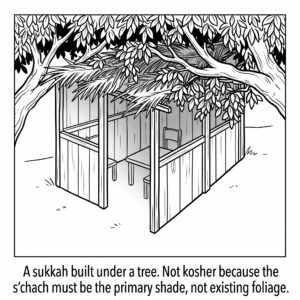
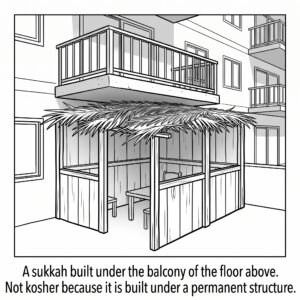
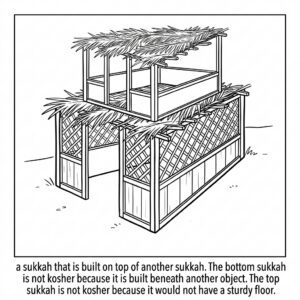
Placement: The sukkah must be constructed entirely under the open sky. It is not kosher if built under a tree, a building overhang, or a permanent roof.
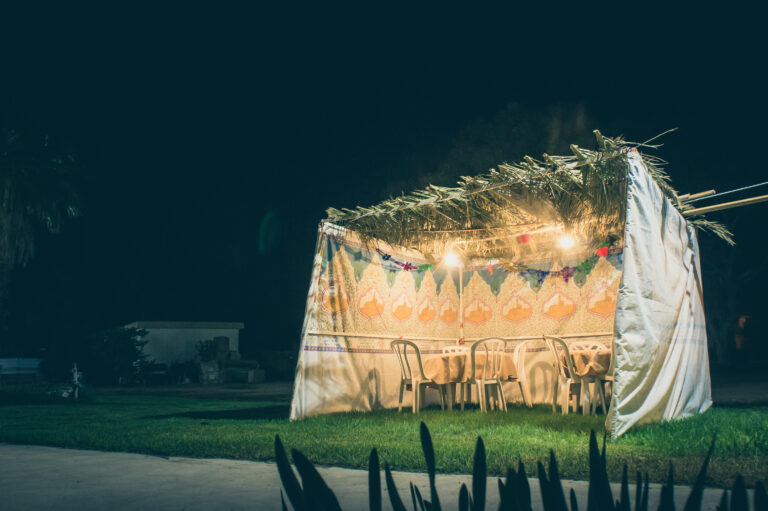
There are many different layouts and materials possible for a kosher sukkah. Here’s one example: