Synopsis: Dirshuni: Contemporary Women’s Midrash, edited by Tamar Biala, showcases bold, creative modern midrashim written by Israeli women. In response to October 7, 2023, Biala is preparing a new volume featuring voices from communities attacked that day, bereaved mothers and others, addressing loss, captivity, displacement, trauma, and the urgent theological question: Where was God?
These works bring today’s lived experience into direct dialogue with ancient texts, using the classical midrashic toolbox—interpretation, re-imagination, and poetic expansion. They refill the other half of the missing Jewish bookshelf.
Description: This course explores Dirshuni and, in particular, the powerful midrashim written by Israeli women after October 7. Together we will examine how midrash becomes a tool for wrestling with trauma, faith, and moral complexity—and how women’s voices recast both Scripture and contemporary events.
Format:Six weekly sessions (1 hour) combining text study and group discussions. On ZOOM.
1. January 15 – Introduction: Tamar Biala
Tamar will tell the story of the Dirshuni project, explore why women turn particularly to midrash these days, and what the impact of this new literature is on their lives and in the Jewish community. Tamar will share and analyze her Midrashim dealing with trauma, struggle and healing.
2. January 22 – Tamar will host Liora Eilon, a survivor of kibbutz Kfar Aza. Liora, a veteran peace activist, lost her son on Oct 7 while protecting the kibbutz as the head of the Emergency squad. Liora will share with us two midrashim she wrote, offering ways to cope with bereavement and with ideological disagreements.
3. January 29 – Tamar will host Oshrat Shoham, the founder of the Hakhel Community in Jerusalem. Oshrat, who earlier in the war accompanied the Goldberg-Pollin family, members of that community, in their struggle to redeem Hersh, later lost her own son Yuval, a soldier, in the war. She will share an earlier Midrash she wrote on the ethical duty to redeem captives, as well as midrashim she has written since Yuval’s death on solidarity and its challenges in Israeli society.
4. February 5 – Tamar will host Rabbi Yael Vurgan, rabbi for the Sha’ar HaNegev Regional Council (part of the area bordering Gaza, which was attacked on Oct 7). Yael will share her experience as the rabbi of broken communities in their struggle to find the power to overcome horror and displacement. Yael, a peace activist for many years, will share with us a midrash she wrote that sees beyond the bleeding present into a possible, hopeful future in the region.
5. February 12 – Tamar will host Nurit Hirshfield Skupinsky, a survivor of Kibbutz Nahal Oz. Nurit, herself a Professor of Midrash spent many years teaching the traditional midrashim that describe the destruction of the First and Second Temples. After October 7, she found herself writing new midrashim about the devastation around her, weaving contemporary tragedy together with the ancient stories.
6. February 19 – Tamar will share Midrashim by other Israeli women coping with displacement and with a deep theological crisis following the war.
For anyone interested in learning Jewish texts and their modern adaptation and interpretation through women’s voices. Adult learners, students, rabbis, and anyone interested in feminist Jewish theology.
Cost: $80 (adult); $40 (students). Should you wish to make other arrangements, please call the KBI’s office at 613-728-3501.
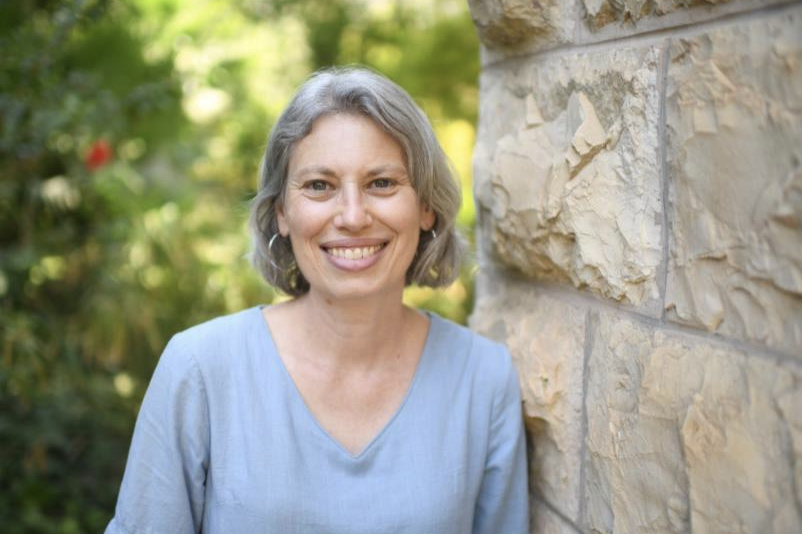
About Tamar Biala
Tamar Biala is a writer and educator. She has taught at the Shalom Hartman Institute Jewish philosophy to high school teachers and IDF army officers. She teaches in various batei-midrash, rabbinical schools, and adult education programs in the US and Israel. Tamar co-edited volume I of Dirshuni: Midrashei- Nashim with Nehama Weingarten-Mintz (Yediot Aharonot/Jewish Agency for Israel, 2009) and, in 2018, edited volume II. In 2022, she edited an English volume, Dirshuni: Contemporary Women’s Midrash (Brandeis University Press, 2022). She lives in Jerusalem.