Meet the Artist: Sylvain Séguin

The Story Behind "Hope"

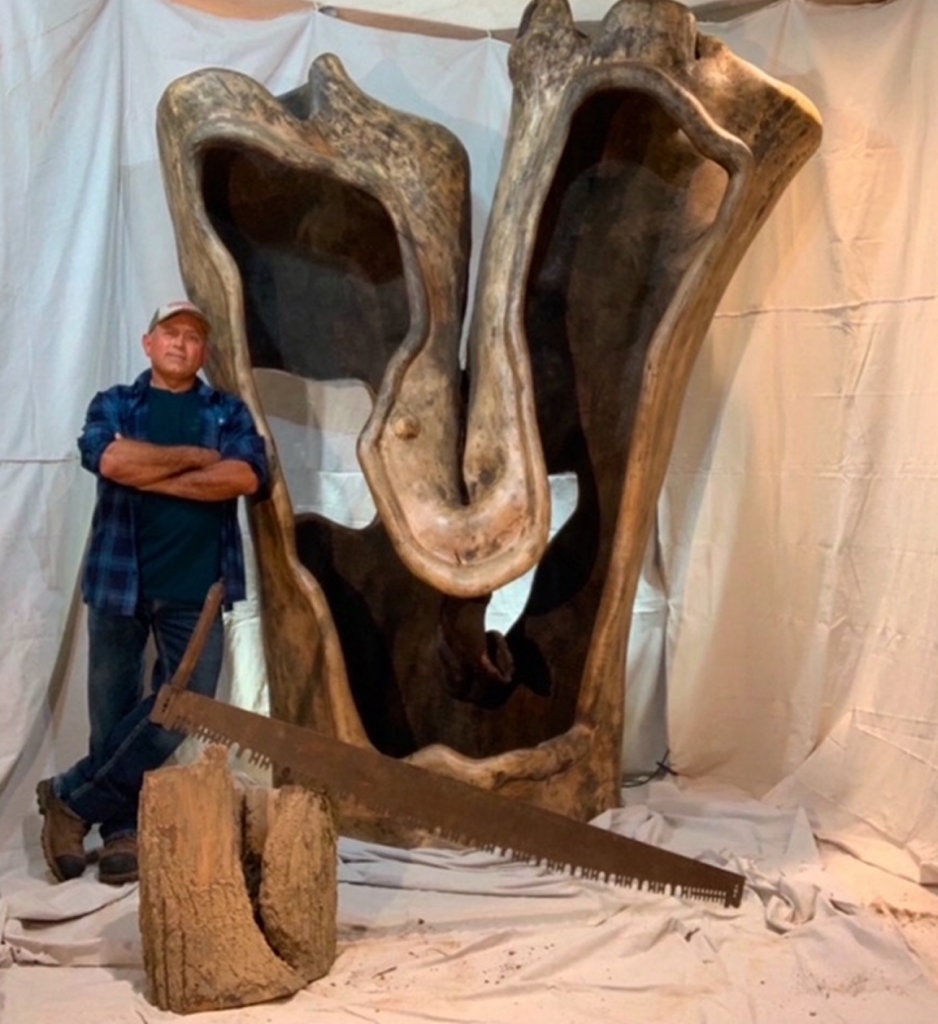
We are currently featuring the sculpture Hope by Sylvain Séguin in the KBI hall. You’re warmly invited to visit KBI during the week or on Shabbat to experience it while it’s on display.

Since 2014, Sylvain has worked with reclaimed wood, giving new life to trees shaped by time and the elements. His sculptures feel both powerful and intimate, capturing the raw beauty of nature in a way that invites you to slow down and look closer.

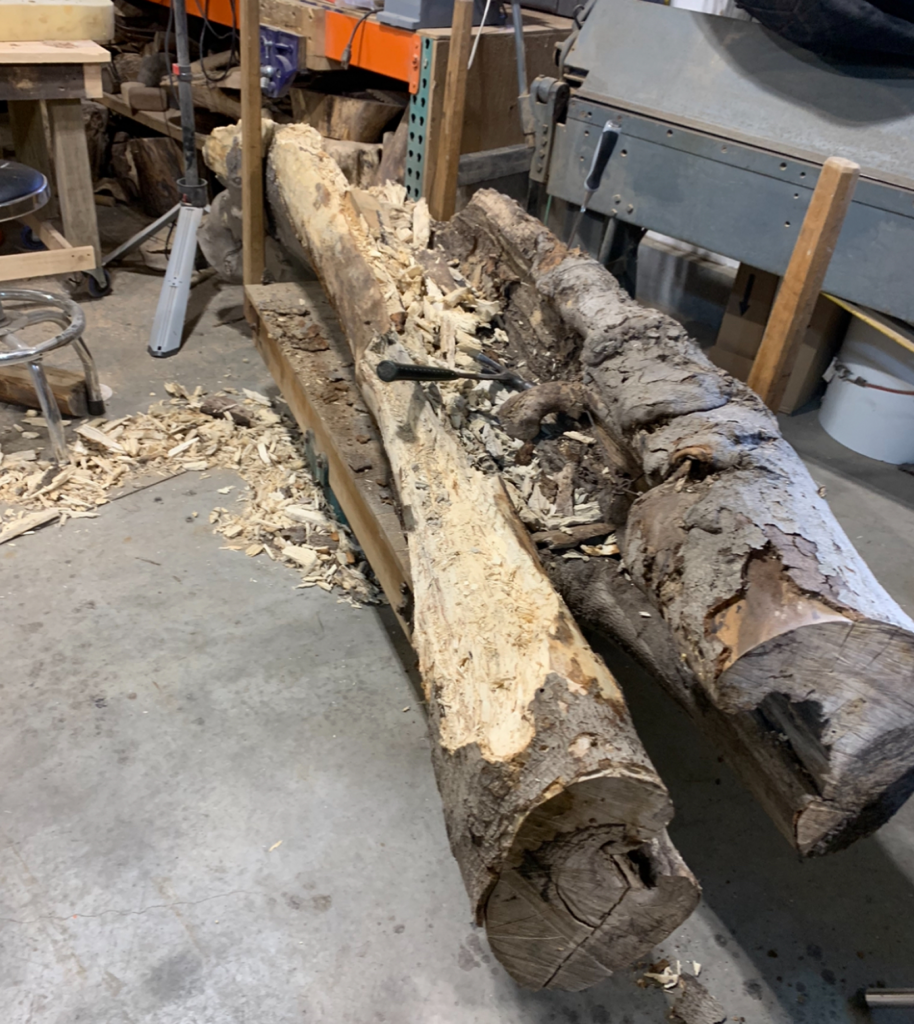
This sculpture was created from a tree found in the forest – a tree that had once been used as a fence post.

It speaks of resilience, survival, and this deep conviction that, even in the darkest conditions, the desire for freedom never disappears. It is called “Hope”. 

We asked the artist a few questions about his journey and creative process.
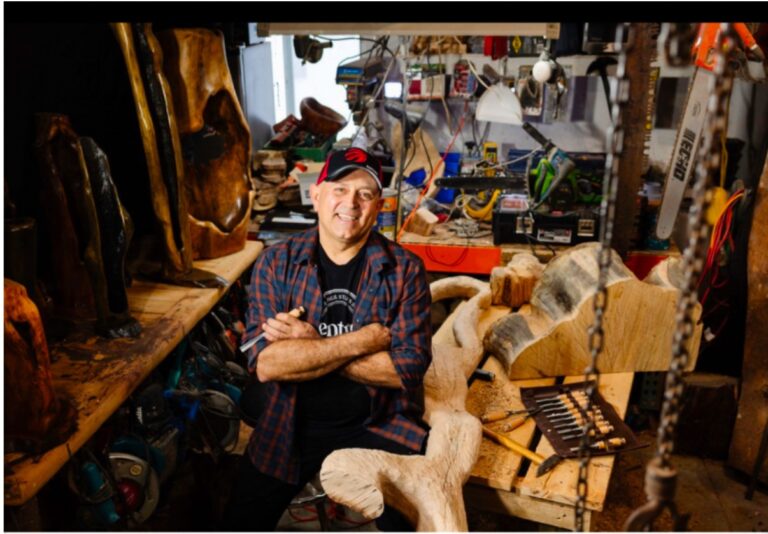
 

Do you work intuitively with each tree, or do you begin with a clear concept in mind?

Sylvain: As with all my sculptures, I never really know what will emerge from a piece of wood when I first look at it.

These trees come from the forest. They have been broken by wind, weather, and time, and they have already lived through difficult experiences.

I begin by removing what is no longer good: the bark and the rotten wood. Once this work is done, what remains is solid wood. That is the moment when I decide what I will create, based on what I see and what I feel.

Each piece is a surprise. I always have the feeling that the tree is speaking to me.

I never force the wood; I accompany it.

From a technical perspective, what was the most challenging aspect of working with this particular piece?

Sylvain: As an independent, self-taught sculptor, each piece represents a real challenge for me.

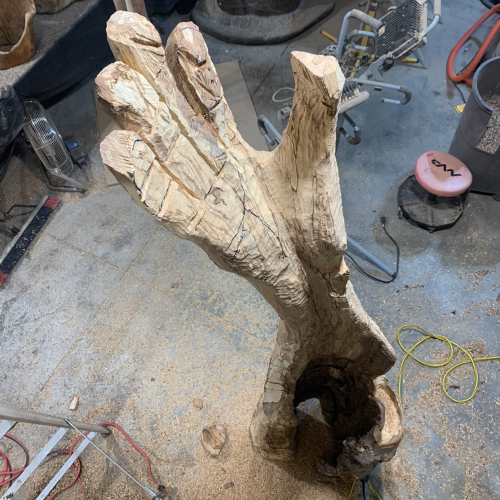
This sculpture is very special, as it confronted me with one of the most difficult elements to sculpt: a hand. I spoke with several sculptors, and they all confirmed that the hand is probably the most complex part to carve in sculpture.

I had never sculpted a hand before. When I found this tree, it already bore scars — fencing and barbed wire had marked the wood — and there was only a very limited amount of material left to work with. I could not afford to make any mistakes.

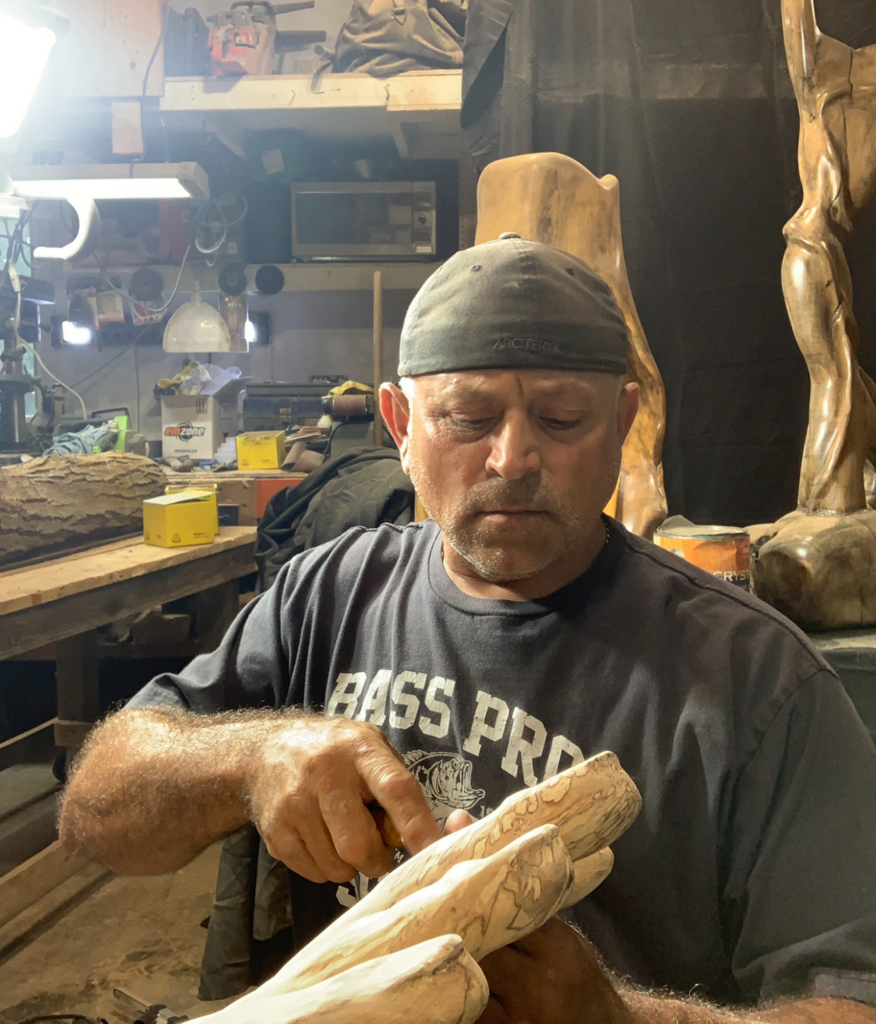
From the beginning, I could already see the hand within the tree. The process required a great deal of time, focus, and patience. My only model was my own hand. By observing it closely, little by little, I was able to recreate that gesture in the wood.

Do you see this sculpture as more about endurance, resistance, or liberation?

Sylvain: For me, this sculpture speaks to all three: endurance, resistance, and liberation.

This tree endured something that was imposed on it during its growth. Metal — barbed wire and fencing elements — that were not part of its nature and that restricted its growth. Despite this, the tree resisted as best it could for all those years. It continued to grow, adapt, and persevere until the end.

I see liberation in the gesture the tree presented to me. Even after its death, it is as if the soul of the tree was freed from this injustice, and the sculpture allows it to be given a second life.

I believe this is a story that many human beings can recognize within themselves.

image4 1

How do you imagine your art evolving alongside your own personal growth?

Sylvain: When I first began sculpting, I always worked in the same way: I would find a tree, bring it home, and listen to what it had to say to me.

Over the years, my work has evolved alongside me. I began to incorporate different materials into my sculptures, such as copper, rope, stones, metal, bronze, and varnish. I see myself a bit like a child starting school. At first, you learn the basics, and then, year after year, you refine your skills. Each sculpture was like a new year of learning for me.

Today, my work pays even more attention to detail. Patience has become one of my greatest strengths, and I believe that this evolution over the years has truly borne fruit.

I continue to learn with every sculpture, and I believe that this journey will never truly end.

Looking back, how do you see your path as an artist today?

Sylvain: Today, I look back on my journey with a great sense of gratitude. The path has not always been easy, but it has brought me exactly where I needed to be.

Over time, I came to understand that sculpture has become a form of therapy for me. At first, I sculpted as a way to let go of the problems of a workday. It was a moment when I completely disconnected, thinking of nothing other than creating.

Gradually, it began to occupy a large place in my thoughts. I started reflecting on my future and on the possibility of continuing to work with my hands as I grow older. Sculpture became a way for me to prepare for the next stage of life. There is a significant difference between the beginning and today. I am more motivated, more persistent, and more aware of what I do. I sincerely believe that when we respect what we do and truly love our work, it continues to improve day after day.

If I sculpt with trees, it is because I have always loved trees and forests. Where some see only a dead or rotten tree, I see a second chance. Giving a new life to that tree is what gives my work its deepest meaning.

Today, I feel that I am exactly where I belong in what I do.